



Scorpio Birthstone Colors: October vs. November Stones
by zhousamuel on Nov 11 2026
Scorpio birthdays sit at the boundary between October and November, so Scorpio birthstone colors depend on the birth month. In the Western zodiac date range listed by Encyclopaedia Britannica, Scorpio runs from October 24 through November 21. An October Scorpio traditionally chooses opal or tourmaline, while a November Scorpio chooses topaz or citrine.
That distinction is important. Zodiac signs and birthstones are cultural traditions, not gemological classifications, and astrology has not been scientifically shown to determine personality or intelligence. The gemstones themselves, however, have measurable properties that matter when you buy jewelry: color origin, hardness, toughness, treatment, stability, setting design, and care requirements.
October offers opal's shifting play-of-color and tourmaline's broad spectrum of pink, green, blue, red, and multicolored material. November brings topaz in colors ranging from icy blue to imperial orange, together with citrine's warm yellow and golden-orange palette.
October vs. November Scorpio Birthstone Colors
|
Birth month |
Birthstones |
Most recognizable colors |
What creates the visual effect? |
Practical wear note |
|
October |
Opal and tourmaline |
Rainbow flashes, white, black, pink, green, blue, red, and multicolor zoning |
Opal diffracts light; tourmaline color is related to chemistry and optical direction |
Opal needs protection from scratches, heat, and sudden temperature change; tourmaline is harder but still needs impact-aware design |
|
November |
Topaz and citrine |
Blue, colorless, yellow, orange, pink, violet, red, champagne, and golden brown |
Topaz color may be natural or treatment-related; citrine may be natural or heat-treated amethyst |
Topaz resists scratches but has poor toughness; citrine is generally suitable for normal wear when properly set |
There is no single "correct" Scorpio birthstone color. A late-October Scorpio might prefer a dark opal with flashes of green and red, a pink tourmaline, or a green-and-pink watermelon tourmaline. A November Scorpio might prefer a cool blue topaz, a rich imperial topaz, or a warm citrine. The most meaningful choice is the one that fits the wearer's taste and the way the jewelry will be used.
October Birthstone Colors: Opal and Tourmaline
Opal: A Moving Spectrum Rather Than One Fixed Color
Opal is the traditional October birthstone. Its defining feature is play-of-color, the appearance of shifting spectral flashes as the stone or light source moves. The effect comes from diffraction of light by orderly arrays of tiny silica spheres inside the material.
Because the color is produced by the interaction of light with the internal structure, opal does not behave like a gemstone with one uniform body color. A single stone may show green, blue, orange, yellow, pink, or red flashes. The body itself may be white, gray, black, transparent, or orange-red, as in many fire opals. Pattern, brightness, distribution of color, and the relationship between body tone and play-of-color all influence appearance and value.
GIA identifies opal as hydrated silica with the chemical formula SiO₂·nH₂O. Its refractive index is approximately 1.37–1.47, and its Mohs hardness is about 5–6.5. Those figures explain both its charm and its limitations. Opal can look spectacular in a large cabochon, but it is more susceptible to scratching than quartz, topaz, sapphire, or diamond.
Opal is also sensitive to thermal shock. Advises warm, soapy-water cleaning and warns that high heat or sudden temperature changes can fracture natural opal. Doublets and triplets require additional care because prolonged exposure to water may weaken the adhesive between their layers.
The main opal-producing regions include Australia, Ethiopia, and Mexico. Lightning Ridge is famous for black opal, Queensland is known for boulder opal, and Mexican deposits are strongly associated with fire opal. Origin is useful information, but it is not a substitute for evaluating the actual stone. A buyer should consider the play-of-color pattern, brightness, body tone, transparency, treatment, assembled construction, and condition.
Opal is a strong choice for a Scorpio who wants a gemstone that feels individual. Natural opals can display exceptionally varied patterns, and the stone's appearance may change noticeably as it moves. For that reason, opal is often selected for its personality rather than for uniform color consistency.

Tourmaline: The Broadest October Color Palette
Tourmaline is the newer October birthstone and one of the most color-diverse gem materials in the jewelry market. It can be pink, red, green, blue, yellow, brown, black, violet, or multicolored. The name is commonly connected with the Sinhalese word toramalli, often translated as "stone with mixed colors."
Tourmaline color has several causes. Iron, and possibly titanium, can contribute to green and blue colors, while manganese is associated with red and pink hues. Some pink and yellow tourmalines may also owe their color to radiation-related color centers. Copper produces the vivid blue-to-green colors associated with Paraíba and Paraíba-type tourmaline.
This chemistry creates several recognizable October birthstone styles. Rubellite is commonly used for saturated pink-to-red tourmaline. Chrome tourmaline can show intense green. Paraíba-type material may appear electric blue, green, or blue-violet. Watermelon tourmaline is valued for its natural green outer zone and pink interior zone, although the quality and sharpness of the zoning vary from stone to stone.
Tourmaline measures approximately 7–7.5 on the Mohs scale and has a refractive index of about 1.624–1.644. It is therefore more scratch-resistant than opal and is generally considered suitable for everyday wear when the design is appropriate. It is not immune to damage. Thin points, exposed corners, a vulnerable girdle, or a severe blow can still cause chipping or breakage.
Tourmaline is particularly appealing to a Scorpio who wants to personalize the color. Pink tourmaline can create a softer romantic look. Green tourmaline offers a vivid alternative to emerald. Teal, blue, or violet tourmaline can feel mysterious without relying on black or deep red. Because quality and value vary significantly by variety, color intensity, clarity, size, and treatment, an expensive tourmaline should be accompanied by reliable identification and treatment information.
Recommends warm, soapy water for tourmaline and does not recommend ultrasonic or steam cleaners. Heat can be damaging, so remove tourmaline jewelry before exposure to a jeweler's torch, high heat, or activities that create sudden temperature changes.
November Birthstone Colors: Topaz and Citrine
Topaz: Blue, Pink, Yellow, and Imperial Orange
Topaz gives November-born Scorpios a wide color range. GIA lists colorless, light blue, yellow, orange, pink, violet, brown, and very rare red topaz. Imperial topaz is generally associated with sought-after yellow-orange to pinkish-orange hues, although trade terminology can vary and color should be judged on the stone itself.
Treatment disclosure is especially important for topaz. The vast majority of blue topaz seen today results from treating colorless topaz with irradiation and heating. The treatment creates a permanent blue color in the material. "Mystic Topaz," by contrast, is typically colorless topaz covered with a thin artificial film that produces a rainbow surface effect.
These treatments do not automatically make a stone unsuitable. They do mean that the buyer should know what they are purchasing. A treated blue topaz should not be marketed as naturally blue, and a coated stone requires more conservative cleaning because abrasive cleaners or polishing wheels can remove the coating.
Topaz has a Mohs hardness of 8, so it resists scratching better than tourmaline, citrine, and opal. Hardness, however, is only one part of durability. GIA describes toughness as resistance to breaking and chipping and specifically cautions that topaz has poor toughness. Topaz also has cleavage, which means a sufficiently strong blow in the wrong direction can cause a split or chip.
For that reason, topaz can be suitable for an engagement ring, but it should not be treated as indestructible. Avoid exposed points and very thin edges. A protective bezel, partial bezel, or carefully planned prong arrangement can reduce risk. Remove the ring for sports, heavy lifting, tool use, and other activities involving impact.
Blue topaz works naturally with white gold, platinum-colored metals, and silver. Imperial topaz often looks especially rich in yellow or rose gold. Pink topaz can connect November's palette with October's pink tourmaline, while colorless topaz offers a bright, minimalist alternative.
Citrine: Lemon Yellow to Golden Orange
Citrine is the transparent yellow-to-brownish-orange variety of quartz. Its appearance may range from pale lemon, champagne, and honey to saturated golden orange. It is a November birthstone with a warm visual character and a relatively accessible price range compared with rare varieties of tourmaline or imperial topaz.
A major point of buyer education is that much commercial citrine is created by heat-treating amethyst. This is a common industry treatment, not a reason to reject the stone. The important issue is accurate disclosure. Natural, unheated citrine does exist and is particularly associated with Bolivia's Anahí mine. That locality is also known for crystals containing both purple amethyst and yellow citrine; when both colors appear in one fashioned crystal, the material is called ametrine.
Citrine has a Mohs hardness of 7 and good toughness, which makes it generally suitable for normal wear and care. Warm, soapy water is a safe cleaning method. Steam cleaning is risky because high heat can cause cracking. Prolonged exposure to strong heat or light may also affect some yellow-to-brown gems. For routine maintenance, remove citrine jewelry before using chemicals, applying cosmetics, or working around high heat.
Citrine is a good choice for a Scorpio who wants an elegant and wearable color without a dramatic optical phenomenon. Yellow gold emphasizes its warmth, while white gold creates a cleaner contrast. A pale citrine can look understated and modern; a saturated orange citrine can become the visual focus of a larger statement ring.

Gemological Comparison: What the Numbers Do—and Do Not—Tell You
|
Gemstone |
Material identity |
Main color explanation |
Mohs hardness |
Approximate refractive index |
Care priority |
|
Opal |
Hydrated silica |
Diffraction from ordered silica spheres creates play-of-color |
5–6.5 |
1.37–1.47 |
Avoid scratches, high heat, sudden temperature changes, and unsuitable cleaners |
|
Tourmaline |
Tourmaline mineral group |
Trace elements, color centers, and copper in Paraíba-type material |
7–7.5 |
1.624–1.644 |
Use warm, soapy water; avoid heat, steam, and ultrasonic cleaning |
|
Topaz |
Topaz mineral |
Natural color and treatment; most blue topaz is treated |
8 |
Not listed here because values vary by material and source |
Avoid impact, steam, ultrasonic cleaning, heat, and sudden temperature changes |
|
Citrine |
Quartz variety |
Natural color or heat treatment of amethyst |
7 |
Not listed here because the buyer decision is better served by color and treatment disclosure |
Warm, soapy water is safest; avoid steam and prolonged intense heat |
The Mohs scale measures relative resistance to scratching. It is not linear, and it does not measure resistance to breaking, heat, chemicals, humidity, or light. GIA groups gemstone durability into three separate considerations: hardness, toughness, and stability.
That distinction changes the buying advice. Topaz is harder than citrine, but topaz's poor toughness makes it vulnerable to impact. Opal is softer and more sensitive to heat, but its low density allows large stones to remain comfortable in earrings or pendants. Tourmaline and citrine are often practical compromises, but their settings still need to protect vulnerable edges and corners.
Which Scorpio Birthstone Is Best for an Engagement Ring?

For a ring worn frequently, tourmaline and citrine are often easier to manage than opal. Their hardness and general wearability make them practical choices, provided the stone is well cut and securely set. A low-profile bezel or partial bezel can provide more protection than a delicate setting that leaves the stone's edges exposed.
Topaz can also work in an engagement ring, especially when the design protects the stone from direct blows. Its hardness helps resist everyday scratches, but its cleavage and poor toughness mean that the ring should be removed for impact-heavy activities.
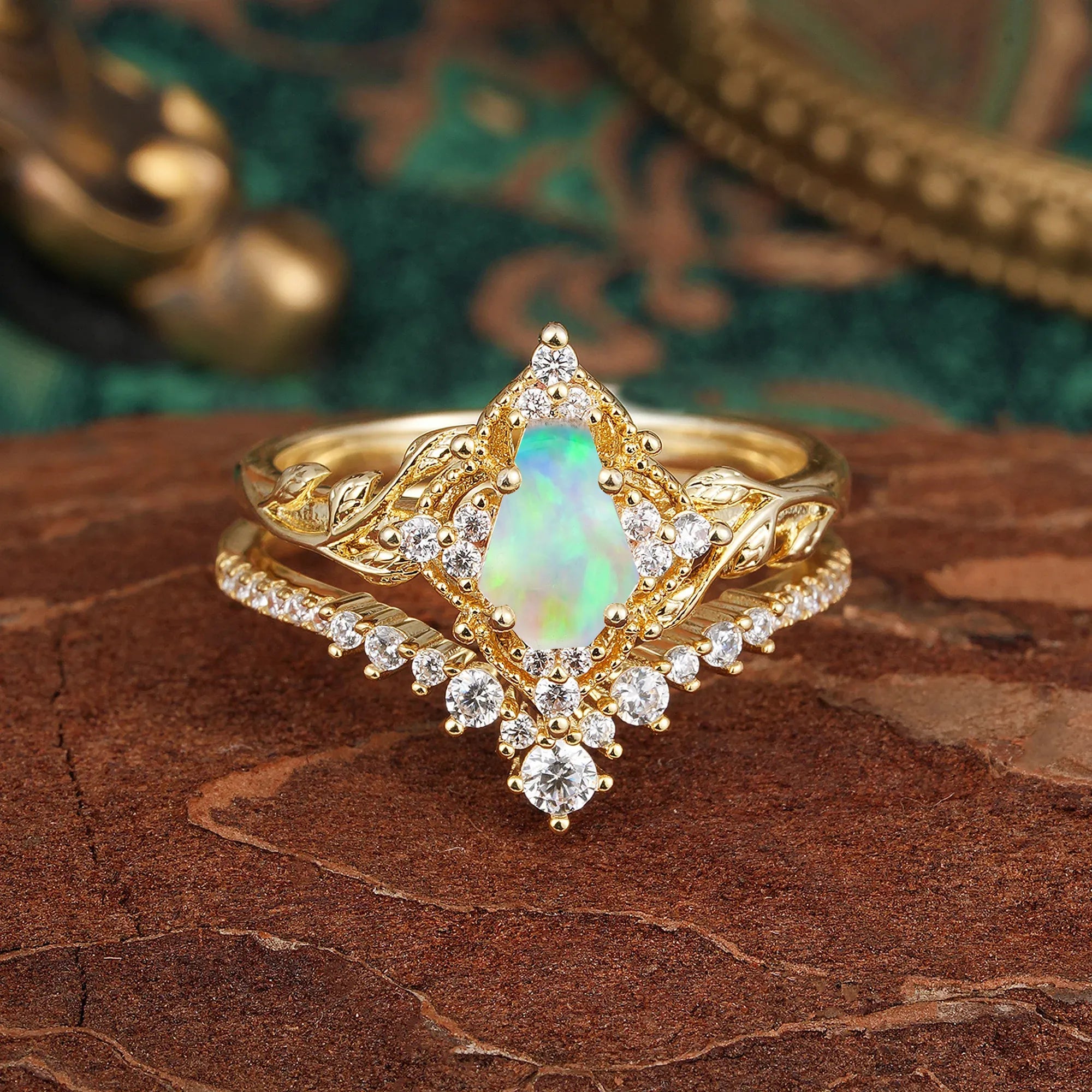
Opal is best treated as a lifestyle choice rather than a conventional "set it and forget it" ring stone. A protective bezel, a cabochon profile, and a lower setting can reduce risk. Earrings and pendants generally expose opal to fewer hard knocks than rings. If an opal ring is chosen, the wearer should understand that its beauty comes with a more careful maintenance routine.
Romalar Jewelry offers opal rings for October and citrine rings for November—feel free to browse our collection.

How to Choose the Right Scorpio Birthstone Color
Start with the wearer's routine. Someone who works with their hands every day may be better served by a protected citrine or tourmaline pendant than by a fragile opal ring. Someone who wants a special-occasion piece may value opal's changing pattern more than maximum resistance to wear.
Next, decide whether the color should remain visually consistent or change with movement. Citrine and most topaz present a relatively stable body color. Opal's play-of-color changes with angle and light. Tourmaline can offer either a stable single color or complex zoning and pleochroism, in which the stone shows different color intensities or hues when viewed in different directions.
Then ask direct questions about treatment. For blue topaz, ask whether the stone has been irradiated and heated. For citrine, ask whether it is natural or heat-treated amethyst. For opal, ask whether it is solid opal, a doublet, a triplet, impregnated, or otherwise treated. For valuable tourmaline, ask whether heat treatment or other enhancement has been disclosed.
A laboratory report can be valuable when the stone is expensive, unusual, or difficult to identify by appearance alone. It can help establish species or variety and document treatment information. A report is not a substitute for a careful visual inspection, but it gives the buyer a stronger factual basis for comparison.
Care Guide for October and November Scorpio Birthstones
For routine cleaning, warm water, mild soap, and a soft brush are the safest general starting point. Rinse carefully and dry with a soft, lint-free cloth. If the stone is treated, coated, assembled, heavily included, or set in a complex piece, ask a qualified jeweler before using ultrasonic or steam equipment.
Opal should be cleaned only with warm, soapy water. Keep it away from sudden temperature changes, high heat, and prolonged dryness. Store it separately from diamond, sapphire, ruby, and other harder materials that can scratch it. Doublets and triplets require particular caution around prolonged water exposure because adhesives may be affected.
Tourmaline should also be cleaned with warm, soapy water. GIA does not recommend ultrasonic or steam cleaning for tourmaline, and heat can be damaging. Topaz should be protected from sharp impact, steam, ultrasonic cleaning, and sudden temperature changes. Coated Mystic Topaz should never be exposed to abrasive cleaning or polishing.
Citrine is generally durable enough for normal wear, but warm, soapy water remains the safest routine method. Avoid steam cleaning and prolonged exposure to intense heat or light. Remove all four gemstone types before swimming, exercising, gardening, cleaning, or using tools. Perfume, cosmetics, chlorine, and household chemicals can affect gemstones, treatments, or metal settings.
Have prongs and bezels inspected periodically if the jewelry is worn often. A gemstone can remain undamaged while its setting gradually loosens. Early maintenance is less expensive and less disruptive than replacing a lost stone.
Final Thought
The clearest answer to "What are the Scorpio birthstone colors?" is month-specific. October Scorpios can choose opal's changing spectrum or tourmaline's remarkable range of single and multicolored material. November Scorpios can choose blue or imperial topaz, or the warm yellow-to-orange palette of citrine.
Color creates the first emotional impression, but gemological properties determine how a piece performs in real life. The strongest purchase combines a disclosed treatment history, a suitable setting, realistic care expectations, and credible information about sourcing. Choose the gemstone that matches the wearer's style and habits, and the birthstone will feel personal for reasons that last beyond the calendar.
FAQs
What is the Scorpio birthstone color?
Scorpio has more than one birthstone color because the sign spans October and November. October birthstones are opal and tourmaline, which may show rainbow play-of-color, pink, green, blue, red, black, or multicolor zoning. November birthstones are topaz and citrine, which may appear blue, colorless, yellow, orange, pink, violet, or golden brown.
Is opal or tourmaline better for an October Scorpio?
Tourmaline is usually the more practical option for frequent wear because it is harder than opal and is generally suitable for everyday jewelry when properly set. Opal may be the better choice for someone who wants changing color, unusual patterns, and a one-of-a-kind appearance. The choice depends on whether individuality or easier daily wear is the priority.
Is blue topaz naturally blue?
Most blue topaz sold today is treated. GIA states that the vast majority of blue topaz results from treating colorless topaz with irradiation and heating. This treatment is common, but it should be disclosed accurately at the point of sale.
Is citrine always natural?
No. Much commercial citrine is produced by heat-treating amethyst. Natural, unheated citrine is also available, including material associated with Bolivia's Anahí mine. Ask the seller whether the stone is natural or treated, especially when the price or claimed rarity is high.
Can I wear an opal Scorpio birthstone ring every day?
You can, but opal needs more care than tourmaline, citrine, or topaz. Choose a protective setting, avoid sharp impacts and sudden temperature changes, and clean it only with warm, soapy water. Earrings and pendants generally provide a lower-risk way to wear opal frequently.
Which Scorpio birthstone is the most durable?
Topaz has the highest Mohs hardness among these four stones at 8, but it has poor toughness and can chip or break after a sharp impact. Tourmaline measures about 7–7.5, while citrine measures 7 and has good toughness. In practical jewelry selection, the setting and the wearer's habits matter as much as the hardness number.
Which Scorpio birthstone looks best with yellow gold?
Citrine and imperial topaz naturally complement yellow gold because their yellow, orange, and brownish-orange tones create a warm palette. Pink, red, and orange tourmaline can also look rich in yellow or rose gold. Opal can work with any metal color; the best choice depends on whether the design emphasizes its body tone, play-of-color, or surrounding accents.
Do Scorpio birthstones have scientifically proven powers?
No. Birthstone meanings and astrological associations are cultural traditions and personal beliefs. They can make jewelry emotionally meaningful, but they should not be presented as scientifically proven effects. The measurable reasons to choose one stone over another are color, durability, treatment, setting, provenance, and care requirements.
Share