



What Is the November Birthstone? Topaz and Citrine Explained
by zhousamuel on Nov 20 2026
November birthdays come with two recognized birthstone choices: topaz and citrine. Topaz is the traditional stone associated with the month, while citrine is the transparent yellow-to-orange variety of quartz often chosen for its warm color and accessible price. They may be confused in yellow jewelry, but they are different minerals with different chemistry, durability, treatment histories, and buying considerations.
The simplest way to decide is to start with the look you want. Topaz offers the broader color palette, including blue, pink, orange, red, yellow, brown, violet, and colorless material. Citrine stays within the yellow-to-orange family and is especially known for golden, honey, and reddish-orange tones. If you are buying an affordable engagement ring, durability requires a closer look: topaz is harder to scratch, but its cleavage makes it vulnerable to a sharp blow; citrine is softer, yet it has good toughness and is generally easy to wear when properly set.

November birthstones at a glance
|
Property |
Topaz |
Citrine |
|
Mineral |
Topaz |
Quartz, yellow-to-orange variety |
|
Chemical composition |
Al₂(F,OH)₂SiO₄ |
SiO₂ |
|
Main colors |
Colorless, blue, yellow, orange, pink, red, violet, brown, and light green |
Pale yellow, golden yellow, orange, reddish orange, and brownish orange |
|
Mohs hardness |
8 |
7 |
|
Refractive index |
1.619–1.627 |
1.544–1.553 |
|
Specific gravity |
3.53 |
2.66, with a stated range of +0.03/−0.02 |
|
Common enhancement |
Irradiation and heating for much blue topaz; thin coatings for some "Mystic Topaz" |
Heat treatment of amethyst or other quartz for much commercial citrine |
|
Primary durability issue |
Perfect cleavage, which can lead to splitting or chipping after impact |
Fracture risk from abrupt temperature changes; more susceptible to scratching than topaz |
|
Recommended home cleaning |
Warm water, mild soap, and a soft brush or cloth |
Warm water, mild soap, and a soft brush or cloth |
|
Typical market position |
Common blue and colorless material; rare fine pink, red, and Imperial colors |
Usually affordable, including in larger sizes; saturated color and clarity influence appeal |
Hardness and toughness are not interchangeable terms. Hardness describes resistance to scratching. Toughness describes resistance to breaking, chipping, or splitting. Topaz's higher Mohs number therefore does not make it automatically safer for an impact-prone ring.
Topaz: the traditional November choice
Topaz is an aluminum fluorine silicate mineral. Pure topaz is colorless, but its color can be altered by trace elements and structural factors. GIA describes topaz in shades ranging from blue, yellow, orange, pink, and red to brown, violet, light green, and colorless. The gem is also pleochroic, so a viewer may see slightly different color intensity or direction depending on how the crystal is oriented.
Topaz color, rarity, and value
Blue topaz is widely available and is the color many consumers first associate with the stone. Most blue topaz in the modern jewelry market is not naturally blue: colorless topaz is treated with irradiation and then heating to produce a stable blue appearance. Retail terms such as "Sky Blue," "Swiss Blue," and "London Blue" describe commercial color categories, but they do not replace a statement identifying the stone and its treatment.
The warmer colors are a different buying proposition. Yellow, orange, pink, and red topaz can be much rarer than blue material. Imperial topaz generally refers to orange, pinkish-orange, and reddish topaz, but the term does not have one universally fixed color boundary. GIA advises consumers to judge the actual color rather than assuming that the word "Imperial" alone establishes quality or value.
Red topaz is particularly scarce among facet-grade material. Fine pink and reddish-orange gems may also command a significant premium over common blue or colorless stones. Color saturation, clarity, cut, size, and treatment history all influence the result. An origin claim may be relevant to a collector, but it should not replace examination of the gem itself.
Brazil's Minas Gerais is one of the best-known sources for high-quality topaz, particularly yellow, orange, pink, and red material. Other reported sources include Pakistan, Madagascar, Namibia, Nigeria, Mexico, Myanmar, Sri Lanka, Russia, and the United States.

Topaz history and meaning
Topaz has a long history of mistaken identity with other yellow gemstones. Before modern gemology established reliable mineral identification, the word "topaz" was applied more broadly than it is today. The name is often linked to the Sanskrit tapas, meaning "fire," or to the Greek topazos, although the exact linguistic history is debated.
The stone also carries traditional folklore. Ancient Greek accounts associated topaz with strength, while later European and Indian traditions gave it protective or calming qualities. These claims belong to cultural history, not scientific evidence. For a modern jewelry gift, they are best presented as symbolism rather than as a promise of physical, emotional, or spiritual effects.
Topaz has anniversary associations as well. Blue topaz is commonly connected with the fourth wedding anniversary, while Imperial topaz is associated with the twenty-third. That gives the stone a second gifting context beyond November birthdays.
Topaz durability and care
Topaz measures 8 on the Mohs scale, so everyday contact is less likely to scratch it than a quartz gemstone. Its weakness is perfect cleavage. In gemology, cleavage means that a crystal can separate along a particularly weak structural direction. A strong blow at the wrong angle can therefore damage a topaz even though the gem is hard.
For a topaz ring, a protective setting is sensible. Bezel settings, halos, and prongs that shield vulnerable corners can reduce exposure, although no setting can make the stone indestructible. Remove topaz jewelry before sports, manual work, moving heavy objects, or activities where the ring may be struck.
Warm, soapy water and advises against steam and ultrasonic cleaning for topaz. High heat and sudden temperature changes may worsen existing internal breaks. Some yellow-to-brown topaz may also be vulnerable to fading after prolonged exposure to intense heat or sunlight.
A stone sold as "Mystic Topaz" has a separate care issue. Its rainbow appearance comes from a thin artificial coating on colorless topaz. Abrasive cleaners, polishing compounds, and buffing wheels can remove that coating. Hand cleaning with mild soap and water is the safer routine.
Citrine: November's yellow-to-orange quartz
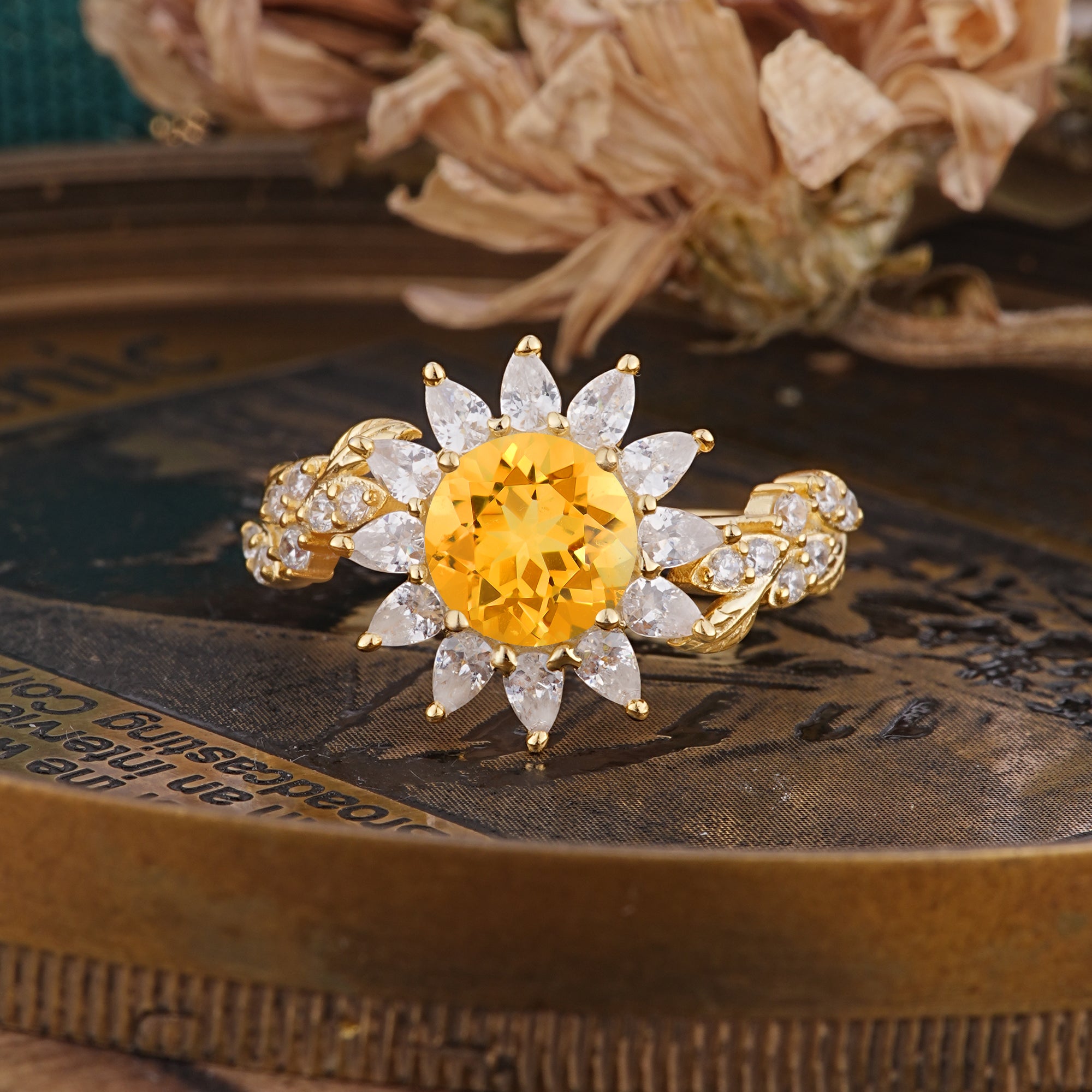
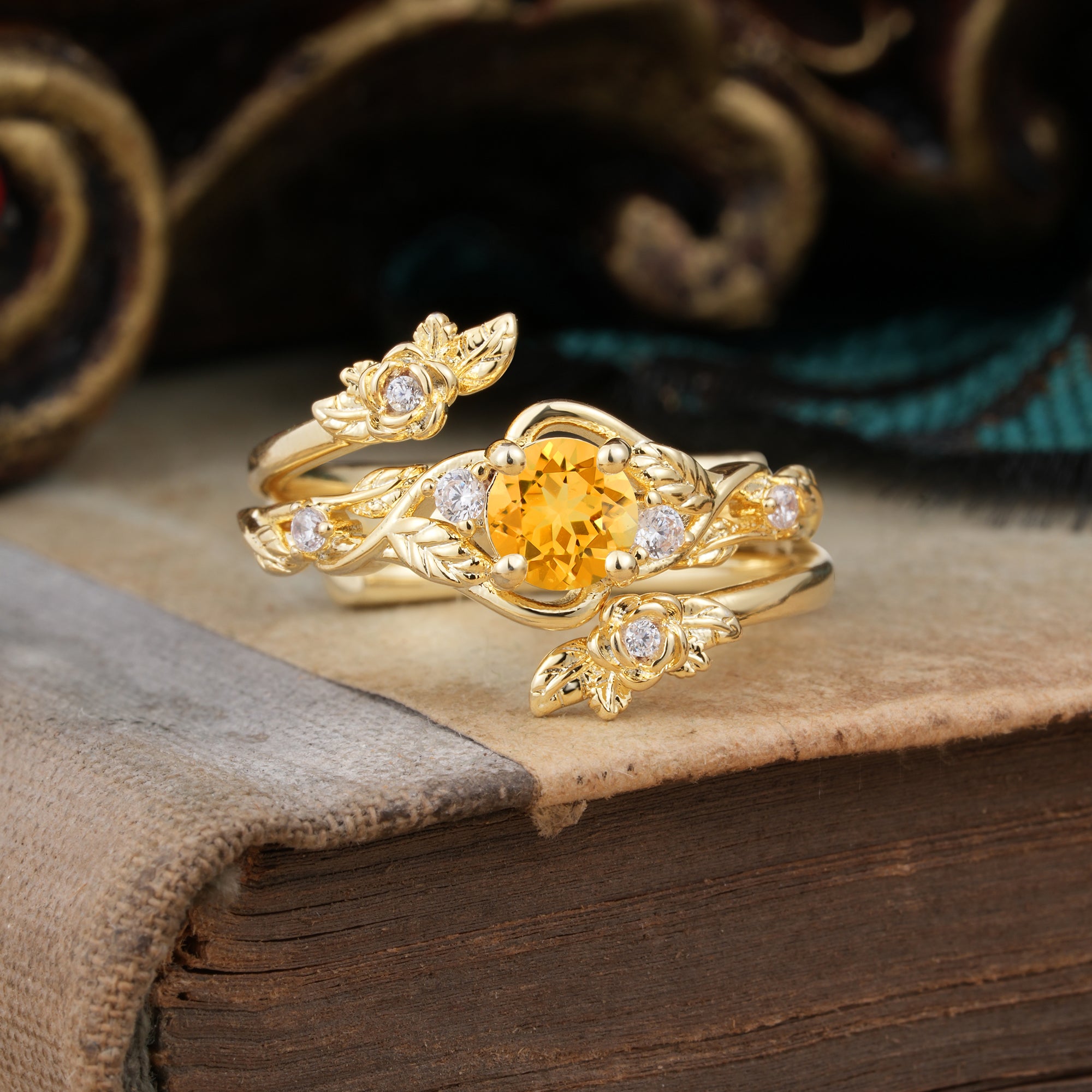
Citrine is the transparent yellow-to-orange variety of quartz. Trace iron contributes to its color, but strongly colored natural citrine is relatively uncommon. As a result, much of the citrine sold today is produced by heat treating amethyst or another quartz material. This does not make the resulting gem fake: it remains quartz. It does mean that the treatment should be accurately described when the stone is sold.
The name "citrine" is commonly associated with the French word citron, meaning lemon. Its warm color helped it become popular in jewelry, and GIA notes its history in ancient jewelry and Victorian-era Scottish designs. Citrine is also traditionally linked with the thirteenth wedding anniversary.
Citrine color and quality
Color is usually the first quality factor to examine. Many buyers prefer strong yellow, golden, orange, or reddish-orange hues without a dull or overly brown appearance. Saturated yellow, reddish-orange, and earthy orange tones are popular in the market.
Faceted citrine is often eye-clean, meaning that inclusions are not visible without magnification. A transparent gem with obvious inclusions may be less valuable, although inclusions can contribute to character in a cabochon, carving, or unusual collector specimen. Cut also matters: a well-proportioned stone can return more light and appear livelier than a larger but poorly cut gem.
Citrine is available in substantial sizes without the steep per-carat increases often associated with rare colored gems. That makes it useful for large pendants, cocktail rings, statement earrings, and custom jewelry. Size should still be considered alongside color, transparency, cut quality, setting security, and treatment disclosure.
Ametrine is a related visual phenomenon in which amethyst and citrine colors occur together in one quartz crystal. Bolivia's Anahí mine is an important source of natural, unheated citrine and ametrine. GIA also lists Bolivia, Brazil, Spain, Madagascar, Mexico, and Uruguay among notable sources connected with citrine.
Citrine durability and care
Citrine has a Mohs hardness of 7 and good toughness, which generally makes it suitable for normal jewelry wear. It can still be scratched by harder gems, so store citrine separately from diamond, sapphire, and topaz jewelry. A separate soft pouch or lined compartment is a simple precaution.
Warm, soapy water is the safest general cleaning method. Ultrasonic cleaning is usually acceptable for citrine, but warns that steam cleaning can be risky because high heat may cause cracking. When a stone has significant inclusions, fractures, an unknown treatment history, or a fragile setting, hand cleaning is the prudent default.
Topaz or citrine: which November birthstone should you choose?
The answer depends on the jewelry's purpose rather than on a universal ranking. Topaz is a stronger choice for someone who wants blue, pink, orange, or red color options. Citrine is compelling for someone who prefers golden warmth, a large stone, and a generally accessible price point.
|
Buying priority |
Why topaz may suit you |
Why citrine may suit you |
|
Color variety |
It spans a much wider palette, including blue and pink |
Its focused yellow-to-orange range is easy to coordinate with warm metals |
|
Scratch resistance |
Mohs 8 gives it an advantage over quartz |
Mohs 7 is still practical for normal wear with sensible care |
|
Impact tolerance |
Requires a protective design because of cleavage |
Good toughness, although abrupt heat changes remain a risk |
|
Rarity and collecting |
Fine pink, red, and reddish-orange material can be scarce |
Natural unheated citrine and distinctive ametrine may appeal to collectors |
|
Large jewelry |
Large crystals can yield impressive gems |
Large, attractive stones are often available at approachable prices |
|
Treatment questions |
Ask about irradiation, heating, or a surface coating |
Ask whether the stone is natural, heated, or laboratory grown |
|
Ring suitability |
Wearable when securely set and protected from hard knocks |
Wearable for everyday use when protected from scratches and temperature shock |
|
Overall style |
Cool blue, romantic pink, or rich Imperial color |
Golden, honey, autumnal, or glowing orange color |
For a ring worn every day, the mounting deserves as much attention as the gemstone. A design should shield the stone's corners, hold it firmly, and allow a jeweler to inspect the setting later. Earrings and pendants are generally exposed to fewer impacts, so both stones offer particularly broad design possibilities in those formats.
Treatment disclosure: what a careful buyer should ask
Treatment is not automatically a negative. Many widely enjoyed gems receive accepted treatments that improve or change color. The important consumer issue is whether the stone is accurately identified and whether the seller explains a treatment that affects permanence, care, or value.
For blue topaz, ask whether the blue color is natural or created through irradiation and heating. For citrine, ask whether the material is natural, heat treated, laboratory grown, or another quartz material being sold under an inaccurate name. A reputable seller should be able to answer clearly and should not imply that treated color is naturally occurring.
In the United States, the Federal Trade Commission's Jewelry Guides state that gemstone treatments should be disclosed when they are not permanent, create special care requirements, or significantly affect value. The same rules address clear descriptions for laboratory-grown, imitation, or simulated stones and apply to online descriptions where the buyer cannot inspect the item in person.
The FTC rules are a consumer-protection framework, not a grading system. They do not determine whether a treated gemstone is beautiful or worth buying. They reinforce the buyer's right to receive material information before purchasing.
Responsible sourcing and documentation
A responsible jewelry purchase involves more than the identity of the center stone. Ask what the retailer can say about the origin and supply chain of the gemstone and precious metal, whether records are available, and which social and environmental standards guide the business.
The Responsible Jewellery Council works across the jewelry and watch supply chain and maintains standards that address human rights, labor rights, health and safety, product integrity, and responsible business practices. Membership or certification is not proof of every detail about a particular stone, and it should not be treated as a substitute for product-level disclosure. It is, however, a useful starting point for evaluating a company's formal policies and external accountability.
For expensive or unusually rare topaz, particularly fine pink, red, or Imperial material, an independent colored-stone report can add confidence. GIA explains that its Colored Stone Identification Report can identify whether a stone is natural or laboratory grown and report detectable treatments. It is an identification service, not a diamond-style letter-grade report.
Styling November birthstone jewelry
Topaz is ideal when the design is driven by color. Pale blue topaz has a crisp appearance in white gold or platinum. Orange, yellow, and Imperial topaz often complement yellow or rose gold. Pink topaz can provide a softer romantic accent, while colorless topaz can add brightness without competing with the metal or other colored stones.
Citrine naturally complements warm palettes. Yellow gold intensifies its honey and amber tones, while white gold provides a cleaner contrast. Oval, cushion, and elongated cuts can create a generous visual presence, particularly in pendants and cocktail rings. A citrine-and-amethyst combination can echo the two-color effect of ametrine while giving a designer greater control over the finished layout.
Care checklist for both November birthstones
Clean topaz and citrine at home with lukewarm water, mild soap, and a soft brush or lint-free cloth. Rinse away soap residue and dry the jewelry carefully. Avoid abrasive powders, harsh chemicals, and sudden changes from very hot to cold conditions.
Do not put topaz in an ultrasonic or steam cleaner. Citrine may tolerate ultrasonic cleaning in many cases, but hand cleaning remains the safer choice when the stone's treatment or internal condition is uncertain. Never use abrasive products on coated "Mystic Topaz."
Store each piece separately so harder jewelry does not scratch a softer stone. Check frequently worn rings for loose prongs, an opening bezel, or a damaged shank. If the stone is chipped, fractured, loose, or cloudy after an impact, stop wearing the piece and have it examined by a qualified jeweler.
Final Thought
The November birthstones are topaz and citrine. Topaz is the better fit for shoppers who want a wide color range, higher scratch resistance, or the collecting appeal of rare pink, red, and Imperial colors. Citrine suits those who prefer golden color, generous size, and accessible pricing. The strongest purchase is not simply the prettiest stone: it is one with accurate identification, honest treatment disclosure, a secure setting, and care instructions appropriate to its actual properties.
FAQs
What is the November birthstone?
November has two recognized birthstones: topaz and citrine. Topaz is the traditional November stone, while citrine is the month's yellow-to-orange quartz choice. The two can resemble each other, but they are unrelated minerals.
Is topaz or citrine the "real" November birthstone?
Both are legitimate November birthstones. "Traditional" usually refers to topaz, while citrine is widely accepted as the second or alternative stone. When shopping, ask the seller to name the actual mineral rather than relying only on the phrase "November birthstone."
Are topaz and citrine the same stone?
No. Topaz is an aluminum fluorine silicate, while citrine is quartz with the chemical composition SiO₂. Their different chemistry produces different optical and physical properties.
Is blue topaz naturally blue?
Naturally blue topaz is uncommon in commercial jewelry. Much of the blue material begins as colorless topaz and is treated with irradiation and heating. The color treatment should be disclosed by the seller.
Is citrine usually heat treated?
Yes. Natural citrine is relatively rare, so much market material is made by heating amethyst or another quartz variety. Heat-treated citrine is genuine quartz, but the treatment history should be described accurately.
Which November birthstone is harder?
Topaz is harder, measuring 8 on the Mohs scale, while citrine measures 7. Topaz nevertheless has perfect cleavage, so it may be more vulnerable to a strong impact at the wrong angle.
Can a November birthstone be worn in an engagement ring?
It can, but the design and lifestyle should be considered. Citrine is generally suitable for normal wear and topaz can also work in a protected mounting. Remove either gemstone for sports, manual work, heavy cleaning, and activities likely to expose the ring to impact or temperature shock.
How do you clean topaz and citrine?
Use warm, soapy water and a soft brush or cloth. Avoid steam cleaning. GIA advises against ultrasonic cleaning for topaz; although citrine is often compatible with ultrasonic cleaning, hand cleaning is the conservative choice when inclusions, fractures, coatings, or treatments are unknown.
Is Imperial topaz always the most valuable topaz?
No. Imperial is a trade term rather than a universally standardized grade. The stone's actual hue, saturation, clarity, cut, size, treatment, and credible origin documentation all matter. Fine reddish-orange and pinkish-orange topaz are generally rarer than common blue topaz, but the label alone does not establish value.
Share