



How to Care for Turquoise, Citrine, Amethyst, and Peridot Rings
by zhousamuel on Nov 13 2026
Turquoise, citrine, amethyst, and peridot may all be colorful ring stones, but they should not share a single care routine. Turquoise is the most chemically and surface-sensitive of this group. Citrine and amethyst are durable quartz varieties, yet both have important heat, light, and treatment boundaries. Peridot is wearable but needs careful protection from impact, rapid heat, acid exposure, and powered cleaning.
The useful question is not only, "Is this a durable gemstone?" It is: "What exposures does this stone—and this particular ring—need to avoid?" The answer depends on hardness and toughness, but also on heat, chemicals, treatment history, and the security of the setting.

Read the material profile before choosing a cleaning method
Hardness is a scratch-resistance scale. Toughness is a material's resistance to chipping or breaking. Stability describes how a gem responds to heat, light, chemicals, and ordinary wear. A ring's setting is a separate issue: even a durable gem should not be aggressively cleaned when a prong is loose or an accent stone is missing.
|
Gemstone |
GIA hardness and toughness guidance |
Main care sensitivity |
Meaning for a ring wearer |
|
Turquoise |
Mohs 5–6; fair to good toughness. |
High heat, chemicals, cosmetics, skin oils, and perspiration can change its appearance; some turquoise has treatment-sensitive surfaces. |
Handle gently, avoid chemical residue, and keep all powered cleaning off the table. |
|
Citrine |
Mohs 7; good toughness. |
Abrupt temperature changes can fracture it; prolonged intense light can fade some color. |
Wear regularly with scratch, heat, light, and treatment awareness. |
|
Amethyst |
Mohs 7; good toughness. |
Abrupt temperature changes can fracture it; prolonged intense light can fade some color. |
Wear regularly, but keep heat and steam out of the care routine. |
|
Peridot |
Mohs 6.5–7; fair to good toughness. |
Rapid or uneven heat, hard blows, strong acids, and prolonged acid perspiration can create risk. |
Use a gentle hand-cleaning routine and remove for impact- or residue-heavy activity. |
Turquoise ring care: avoid heat, residue, and every powered cleaner
Turquoise has the strictest device rule. GIA lists turquoise at Mohs 5 to 6 with fair to good toughness. High heat can cause discoloration and surface damage, and chemicals, cosmetics, skin oils, and perspiration as possible discoloration risks.
Some turquoise is treated to improve surface appearance. Heat or solvents can damage treated surfaces. Since treatment may not be obvious to an owner, do not use solvent-based cleaners or unverified jewelry dips on a turquoise ring.


How to clean a turquoise ring
Use warm, soapy water and a soft cloth or soft brush that is appropriate for the setting. Rinse carefully and dry promptly with a lint-free cloth. Warm, soapy water as safe for turquoise jewelry.
The no-device rule is explicit: Turquoise should never be cleaned with steam or ultrasonic cleaners. Do not make an exception because the stone is stabilized, high-grade, vintage, or visibly clean. Gentle hand care is the right default.
How to wear turquoise more safely
Make turquoise the last thing you put on. Apply lotion, perfume, sunscreen, hair product, and cosmetics first, then allow them to settle before wearing the ring. Take the ring off before household cleaning, swimming, gardening, exercise, hard gripping, and other situations involving chemical residue, heavy perspiration, abrasion, or impact. These are preventive habits, not claims that a short ordinary wear period will necessarily damage a ring.
After hot or active wear, wipe the ring with a clean soft cloth before storage. If the surface looks dull, return to the warm-soapy-water method rather than attempting to polish it with a harsh product.
Citrine ring care: good daily-wear potential with heat and light boundaries
GIA rates citrine at Mohs 7 with good toughness and says it is suitable for all jewelry types, including rings, as long as the wearer understands its limited hardness.
The limits matter. Abrupt temperature changes can fracture citrine and that some color can fade with prolonged exposure to intense light. It also identifies hydrofluoric acid, ammonium fluoride, and alkaline solutions as damaging to citrine.


How to clean a citrine ring
Warm, soapy water is safe for citrine. Ultrasonic cleaning is usually safe, except in rare instances in which the stone is dyed or treated by fracture filling. Not recommend steam cleaning because citrine should not be subjected to heat.
The treatment distinction is important, but it should be applied accurately. An undocumented citrine does not automatically lose the warm-soapy-water option. What should wait for treatment and setting confirmation is ultrasonic cleaning, not gentle hand cleaning. If the ring contains other gems, delicate metalwork, loose stones, or a visible fracture, use warm soapy water only and seek professional advice before considering a device.
Citrine's heat and light routine
Keep a citrine ring away from high heat and abrupt temperature changes. Avoid storing it where it receives prolonged intense light. GIA's stability guidance supports avoiding the conditions that can fracture the stone or fade some of its color. For active work, gardening, exercise with equipment, or tasks that can produce a hard blow, remove the ring and store it separately.
Amethyst ring care: the same quartz caution, in a separate color story
Amethyst is also quartz and has a closely related care profile. GIA lists it at Mohs 7 with good toughness and describes it as suitable for jewelry, including rings, when the owner takes reasonable precautions against scratching.
Abrupt temperature changes can fracture amethyst and that some amethyst color can fade with prolonged intense light. It also identifies hydrofluoric acid, ammonium fluoride, and alkaline solutions as potentially damaging.

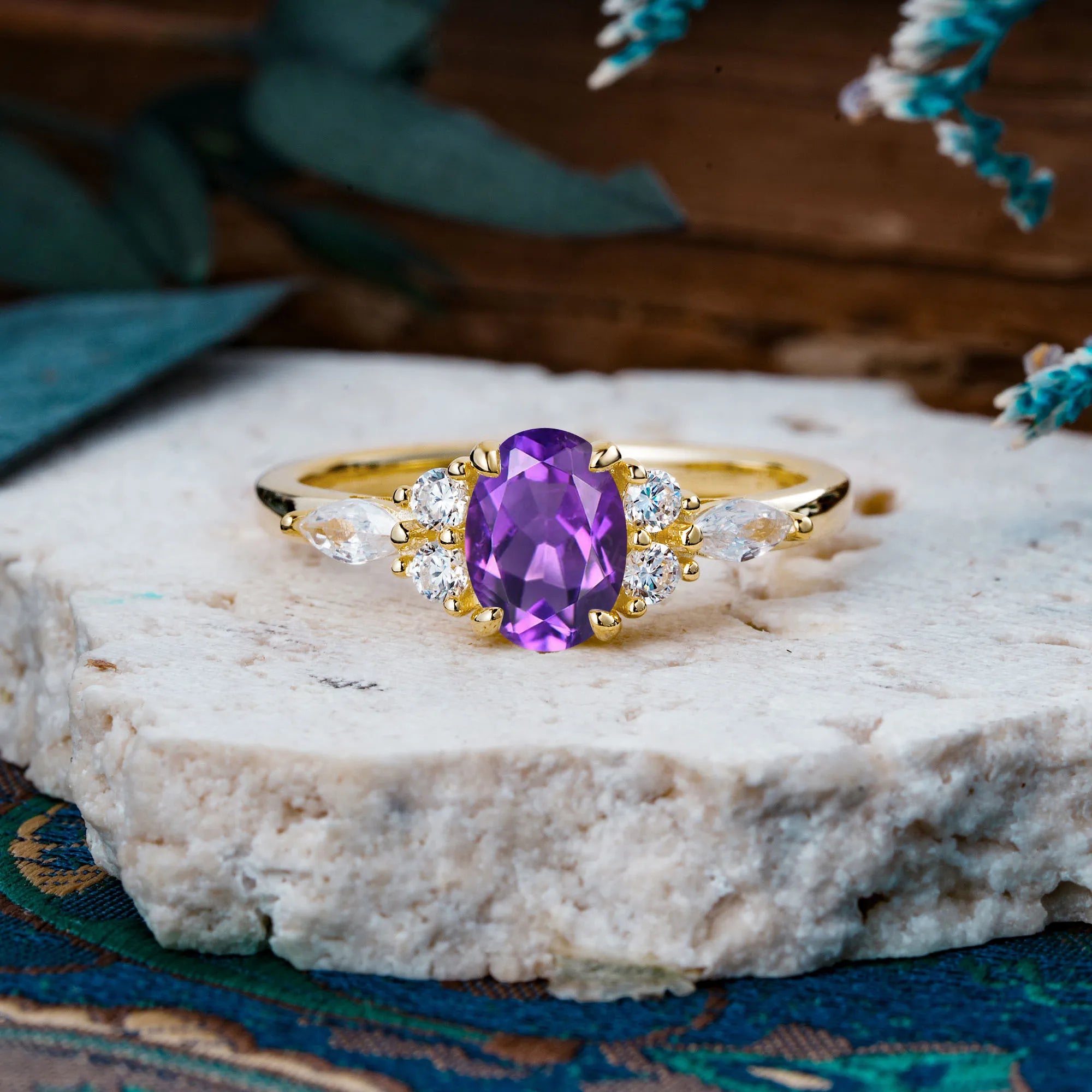
How to clean an amethyst ring
Warm, soapy water is safe for amethyst. Ultrasonic cleaning is usually safe except in the rare cases of dyed or fracture-filled material. Steam is not recommended, and amethyst should not be subjected to heat.
For a simple, secure amethyst ring with known standard material, ultrasound may be an option. For an amethyst with unknown treatment, a multigem setting, loose prongs, or a visible crack, warm soapy water is the safer route while you obtain professional advice. The caution is about powered cleaning and setting condition; it does not erase the source-supported safety of gentle hand cleaning.
Amethyst wear and storage habits
Protect the ring from sharp impact, prolonged intense light, and rapid changes in temperature. Store it in a separate padded pouch, ring slot, or box so that it does not rub against harder jewelry. The goal is to preserve both its color and its surface condition over time.
Peridot ring care: warm soapy water is the complete home plan
Peridot has a more modest durability profile than citrine and amethyst. GIA gives it a Mohs rating of 6.5 to 7 and fair to good toughness. Peridot is durable enough for jewelry wear, but should be worn with care to prevent scratches and hard blows that can fracture it.
Peridot also has distinctive stability limitations. Rapid or uneven heat can cause fracture. It says peridot is stable to light but can be attacked by sulfuric acid, less easily by hydrochloric acid, and over a long period by acid perspiration.


How to clean a peridot ring
Warm, soapy water is the best cleaning method for peridot. Not recommend ultrasonic or steam cleaners.
Use a mild soap-and-water routine, clean around the setting with a soft brush or cloth, rinse in a separate bowl or glass, and dry with a lint-free cloth. Skip power cleaners, steam, strong chemical products, acids, and experimental home remedies.
Peridot and active wear
A peridot ring can be worn normally, but remove it before activities involving hard contact, repetitive gripping, chemical cleaners, or prolonged sweaty exertion. This is a practical response to GIA's impact, heat, acid, and long-term acid-perspiration cautions. After active wear, wipe the ring clean and dry before putting it away.
The cleaning decision table: choose the gentlest source-supported method
|
Ring condition |
Warm soapy water |
Ultrasonic cleaner |
Steam cleaner |
Practical decision |
|
Turquoise, treated or untreated |
Safe with gentle handling. |
Never use. |
Never use. |
Use gentle hand cleaning only; avoid solvents because treatment-sensitive surfaces may be present. |
|
Standard citrine in a secure setting |
Safe. |
Usually safe. |
Not recommended. |
Warm soapy water is the easy default; avoid heat. |
|
Dyed or fracture-filled citrine |
Safe hand-cleaning method. |
Avoid. |
Avoid. |
The ultrasound exception controls the choice. |
|
Citrine with unknown treatment or an uncertain setting |
Use warm soapy water gently. |
Avoid until confirmed. |
Avoid. |
Unknown information is a reason to skip a device, not a reason to use a harsher method. |
|
Standard amethyst in a secure setting |
Safe. |
Usually safe. |
Not recommended. |
Start with warm soapy water; keep heat out of the routine. |
|
Dyed or fracture-filled amethyst |
Safe hand-cleaning method. |
Avoid. |
Avoid. |
Treatment changes ultrasound eligibility. |
|
Amethyst with unknown treatment or an uncertain setting |
Use warm soapy water gently. |
Avoid until confirmed. |
Avoid. |
Gentle hand cleaning is the conservative route. |
|
Peridot |
Best method. |
Not recommended. |
Not recommended. |
Hand cleaning is the complete at-home plan. |
A careful at-home routine for suitable rings
For a ring that is appropriate for warm soapy water, prepare a bowl of warm—not hot—water with mild soap. GIA recommends warm water, mild dish soap without detergents, and a soft brush for most colored gems, subject to each gem's limitations.
Check the ring before you clean. If a stone is tilted, a prong catches, an accent stone is missing, or a gap appears between the stone and setting, do not brush forcefully or use a machine. Cleaning cannot repair a loose setting.
Clean gently around residue-prone areas, then rinse in a separate glass or bowl rather than directly over an open sink. The risk of losing a loose stone or an entire piece if jewelry is rinsed directly in the sink. Pat dry with a soft lint-free cloth.
Avoid toothpaste, abrasive powders, bleach, acids, strong household products, and improvised online remedies. For these four gemstones, an aggressive cleaner introduces more risk than benefit.

Everyday exposure: when it is sensible to remove the ring
|
Exposure or activity |
Turquoise |
Citrine and amethyst |
Peridot |
Preventive habit |
|
Household cleaners, swimming, and chemical work |
Chemicals and cosmetic residue can discolor it. |
Avoid unnecessary exposure to damaging chemical solutions. |
Acid-sensitive material requires caution. |
Remove before cleaning or swimming. |
|
High heat or rapid temperature changes |
High heat can discolor or damage the surface. |
Abrupt temperature changes can fracture; prolonged intense light can fade some color. |
Rapid or uneven heat can fracture. |
Avoid steam and do not expose the ring to unnecessary heat changes. |
|
Exercise, gardening, and hands-on work |
Oils, perspiration, abrasion, and impact raise avoidable risk. |
Contact and scratching are the main concerns. |
Hard blows and prolonged perspiration are relevant. |
Remove before strenuous or dirty hand activity. |
|
Cosmetics, perfume, lotions, and sunscreen |
GIA specifically names cosmetics and skin oils as discoloration factors. |
Apply products before putting the ring on. |
Avoid unnecessary residue and chemical contact. |
Let products settle before wearing the ring. |
|
Storage with other jewelry |
A softer surface needs protection from contact. |
Harder jewelry can still scratch or damage quartz pieces. |
Separate storage reduces scratch and impact risk. |
Store one ring per padded pouch, slot, or box. |
When home care should stop
Arrange professional help if a gemstone looks loose or tilted, a chip, crack, cloudiness, catching prong, missing accent stone, or a major impact appears. Pause when you do not know the composition of a multigem ring and are considering ultrasound, steam, a chemical product, or repair.
Ask a precise question: "What is the stone's treatment, is the setting secure, and which cleaning method is appropriate for this exact ring?" That question is more useful than asking whether a gemstone name is "safe" in general.
GIA recommends jewelry check-ups every six months. Use that cadence as a practical maintenance habit for regularly worn rings, and arrange an earlier check after a hard knock, a snagging prong, a moved stone, or a missing accent.
Final Thought
Turquoise, citrine, amethyst, and peridot are all wearable ring gems, but each makes a different request of its owner. Turquoise needs firm protection from chemicals, oils, sweat, heat, steam, ultrasound, and solvent-sensitive treatment risk. Citrine and amethyst are good-toughness quartz gems that need heat, intense-light, and treatment-aware care. Peridot needs a quiet routine: warm soapy water, no steam or ultrasound, and sensible protection from impact, heat, acids, and prolonged sweat.
Identify treatment where possible, inspect the setting before cleaning, and choose the least aggressive method that the full ring allows. When you are uncertain, gentle hand cleaning and qualified advice are usually the most durable choices.
FAQs
Can I wear a turquoise ring every day?
You can, but it needs deliberate wear habits. Turquoise is Mohs 5 to 6 and can be discolored by chemicals, cosmetics, skin oils, and perspiration. Remove it for cleaning, swimming, product application, intense exercise, gardening, and hard manual activity. Store it separately after wear.
Can I put citrine or amethyst in an ultrasonic cleaner?
GIA says ultrasound is usually safe for citrine and amethyst, except in rare dyed or fracture-filled cases. When treatment or setting security is unknown, choose warm soapy water and do not use ultrasound until the piece is confirmed suitable.
Is warm soapy water safe if my citrine or amethyst treatment is unknown?
Yes. GIA identifies warm soapy water as safe for citrine and amethyst. The treatment-related restriction in the cited guidance applies to the "usually safe" ultrasonic option. Gentle hand cleaning is therefore the prudent home method when details are missing.
Why must turquoise never go into a steam or ultrasonic cleaner?
GIA directly says that turquoise should never be cleaned with steam or ultrasound. High heat can cause discoloration and surface damage, and some turquoise has treatment-sensitive surfaces that heat or solvents can damage.
Why is steam not recommended for citrine or amethyst?
GIA says citrine and amethyst should not be subjected to heat. Steam is not recommended, and abrupt temperature changes can fracture either gem. Prolonged intense light can fade some color.
Is peridot suitable for an engagement ring or daily-wear ring?
Peridot is durable enough for jewelry wear, according to GIA, but it should be worn with care to prevent scratches and hard blows that can fracture it. A protective setting, mindful wear, separate storage, and warm-soapy-water cleaning help it perform well over time.
Can perspiration affect turquoise or peridot?
GIA says turquoise can be discolored by perspiration and that peridot can be attacked over a long period by acid perspiration. Occasional ordinary wear does not automatically mean damage; remove the ring for prolonged sweaty activity and wipe it clean and dry afterward.
How often should these rings be checked?
GIA recommends jewelry check-ups every six months. Arrange an earlier inspection if a stone seems loose, a prong catches, an accent stone is missing, the ring takes a hard knock, or repair/resizing has recently been completed.
Share