



Home
›
Trends & Style
›
2027 Alternative Engagement Ring Trends: Moss Agate, Opal, Alexandrite, and More

2027 Alternative Engagement Ring Trends: Moss Agate, Opal, Alexandrite, and More
by zhousamuel on Sep 02 2026
A memorable engagement ring does not need to begin with a colorless stone. In 2027, the most compelling alternative engagement rings will make the center gem part of the couple’s visual language: a moss agate whose inclusions resemble an abstract landscape, an opal that changes with every movement, an alexandrite that shifts personality from daylight to lamplight, or a sapphire selected for a color that feels entirely personal.
This does not mean the diamond solitaire is disappearing. It means that more buyers are treating the center stone as a design choice rather than a fixed rule. GIA’s educational guide to diamond alternatives similarly identifies colored stones—including sapphire, spinel, and aquamarine—and laboratory-created options such as moissanite as meaningful alternatives for engagement jewelry.[1]
The useful question is therefore not simply, “What is trending?” It is, “Which gem, setting, and care routine make sense for the person who will wear this ring most days?” This guide answers that question with a gemological—not merely aesthetic—framework. It separates hardness from toughness, identifies where treatments and construction matter, and gives buyers the questions that create a more transparent purchase.
The Short Answer: Which Alternative Stone Suits Which Wearer?
Moss agate is ideal for a wearer who values a one-of-one, nature-led pattern and is prepared to protect a moderately hard stone. Opal is spectacular for someone who accepts a more careful routine in exchange for play-of-color. Alexandrite is a standout for a wearer seeking dramatic color change with excellent everyday durability. Sapphire, spinel, and moissanite are the most straightforward choices for people who want distinctive style with lower maintenance.
A ring’s longevity is never determined by a Mohs number alone. Hardness describes resistance to scratching. Toughness describes resistance to chipping or breaking. Stability describes a gem’s behavior around heat, light, chemicals, and cleaning. GIA emphasizes that the Mohs scale is relative rather than evenly spaced; it is an important comparison tool, but it is not a complete durability score. A setting, a treatment history, and the wearer’s routine all matter as well.
2027 Alternative Engagement Ring Gemstones at a Glance
|
Gemstone |
Distinctive design direction |
Mohs hardness |
Day-to-day ring suitability |
Practical setting direction |
|
Moss agate |
Botanical, misty, or landscape-like inclusions |
6.5–7 |
Suitable with mindful wear and storage |
Low bezel, partial bezel, or protected prongs |
|
Opal |
Play-of-color, cabochon profiles, and warm-metal contrast |
5–6.5 |
A careful-wear choice; vulnerable to scratches and knocks |
Full bezel or a low, protective halo |
|
Alexandrite |
Color change between daylight and incandescent light |
8.5 |
Excellent candidate for regular wear |
Secure prongs, bezel, or a low three-stone ring |
|
Sapphire |
Teal, parti, peach, violet, and blue color stories |
9 |
Excellent for active daily wear |
Most secure styles, including low baskets and east-west settings |
|
Spinel |
Clean gray, lilac, red, or cobalt color with crisp brilliance |
8 |
Strong everyday alternative |
Bezel, cathedral, or substantial prong setting |
|
Moissanite |
High brilliance and vivid fire in modern silhouettes |
9.25 |
Excellent for daily wear |
Solitaire, bezel, east-west, or halo |
|
Moonstone |
Soft adularescence and an antique, moonlit mood |
6–6.5 |
Better for careful wear because of poor toughness and cleavage |
Full bezel and a low dome |
|
Aquamarine |
Airy blue, elongated cuts, and Art Deco geometry |
7.5–8 |
Suitable when securely set and sensibly worn |
East-west oval, bezel, or low four-prong basket |
The table is a decision aid rather than a ranking. A well-made, low opal bezel may be more sensible for one wearer than a tall, exposed ring built around a harder stone. Conversely, no center stone is immune to an impact from a doorframe, gym equipment, or a hard work surface. Good jewelry design starts by anticipating how the ring will actually be used.
Moss Agate: The One-of-One Nature Stone
Moss agate is a natural fit for the 2027 appetite for rings that feel discovered rather than standardized. Despite its name, it contains no botanical moss. It belongs to the quartz family, has the chemical formula silicon dioxide (SiO₂), and is one type of chalcedony; the branching or landscape-like appearance comes from internal inclusions rather than plant material. No two patterns are identical, which makes moss agate especially appealing to buyers who want their moss agate ring to feel private and unrepeatable.

Why Moss Agate Feels Current
Moss agate offers a different kind of luxury from a highly symmetrical brilliant cut. Its visual value lies in composition: a translucent ground, a dark branching inclusion, a cloudy pocket, or an almost scenic arrangement of green and brown. The best moss agate engagement rings allow that composition to remain legible. A quiet yellow-gold bezel, a hand-engraved shank, or two restrained side stones will often serve the center gem better than a crowded halo.
This is also a versatile stone stylistically. An oval or pear-shaped moss agate can read soft and botanical; a kite or hexagon can look graphic and architectural; an east-west oval can make the ring feel calm and contemporary. The aesthetic point is not to make moss agate imitate diamond. It is to use the stone’s pattern as the design’s focal point.
Moss Agate Durability: What Buyers Should Know
IGS lists moss agate at 6.5–7 on the Mohs scale and gives it a “Good” wearability rating.[2] That makes it viable for an engagement ring, but it should not be presented as a no-maintenance substitute for sapphire, alexandrite, or moissanite. A polished surface can accumulate wear when it repeatedly meets abrasive dust, hard jewelry, rough work surfaces, or direct impacts.
The practical solution is design, not alarm. Choose a setting that keeps the stone close to the finger and protects exposed edges. Remove the ring for lifting, gardening, climbing, home improvement, contact sports, or any activity that involves repeated impact. Store it separately from harder jewelry. GIA advises padded, separated storage rather than tossing jewelry together, because contact between pieces can lead to scratches and damage.[7]
When choosing a specific stone, ask for unedited daylight video and several viewing angles. Moss agate is pattern-driven, so a stock image is not enough. Request written disclosure of whether the seller knows of any treatment or enhancement, and keep that disclosure with the invoice. The point is not to reject a gem automatically because it has been treated; the point is to know what was sold and how it should be cared for.
Opal: Extraordinary Color, Honest Care Requirements

Opal can look almost animated. Its play-of-color may show blue, green, orange, red, or violet as the ring moves, while body color and pattern make each gem different. GIA identifies play-of-color as opal’s most important quality factor and explains that color, pattern, and clarity work together in judging appearance. For buyers who want the center stone to feel artistic rather than purely brilliant, that visual complexity is hard to reproduce with another gem.
The trade-off is durability. GIA places opal at 5–6.5 on the Mohs scale, describes its toughness as very poor to fair, and notes that intense light, high heat, or sudden temperature change can lead to fracturing or crazing.[3] This is not a reason to dismiss opal. It is a reason to buy it with an informed care plan and a protective setting.
How to Choose an Opal Ring That You Can Enjoy
Start by assessing beauty in the way GIA recommends: consider the play-of-color, body color, pattern, clarity, cut, and size rather than relying on carat weight alone. Opal is often cut with a domed surface because the shape can best display its play-of-color. Then consider construction and protection. Ask the seller in writing whether the gem is a solid opal or a composite construction, such as a doublet or triplet, because construction affects how the piece should be serviced and repaired.
For an engagement ring, a full bezel is especially compelling. Its metal rim protects more of the gem’s vulnerable edge, and a low setting reduces the chance of a direct blow. GIA specifically advises buyers who are hard on their jewelry to choose a protective setting with metal or gems around an opal, or to accept that an opal ring requires more care than a more robust gem.
Cleaning rules are simple and strict: GIA says warm, soapy water is the only safe way to clean opal. Avoid ultrasonic machines, steam cleaning, harsh chemicals, and abrupt temperature changes. GIA also notes that opal can be impregnated with oil, wax, or plastic, or modified with sugar or smoke treatments; that is another reason written disclosure matters. An opal engagement ring is an excellent choice for a careful wearer, not a ring to keep on through every workout, cleaning task, and weekend project.
Alexandrite: A Color-Change Gem With Everyday Strength
Alexandrite is an unusually sophisticated alternative because its drama is optical rather than loud. GIA describes alexandrite as a rare variety of chrysoberyl that can appear green in daylight or fluorescent light and change toward brownish or purplish red under incandescent light. The change is caused by the mineral’s unusual light-absorption behavior, not simply by viewing the stone from a different direction.

That distinction matters when shopping. A listing should not be judged from one image under one ring light. Ask for a video or live viewing in diffuse daylight and warm indoor light. Look for an attractive face-up appearance in both environments, not merely the presence of two technically different colors. GIA also notes that natural alexandrite is relatively expensive because of its scarcity, particularly in larger sizes. Laboratory-grown alexandrite may be an accessible alternative, but the seller should state plainly whether the material is natural or laboratory-grown.
Alexandrite’s Durability Advantage
GIA rates alexandrite at 8.5 Mohs, with excellent toughness and no cleavage, making it a good choice for rings and other mountings subject to daily wear.[4] It is stable under normal wearing conditions. Those traits make alexandrite particularly attractive to couples who want an expressive, unusual center stone without the routine constraints associated with opal or moonstone.
A simple bezel, sturdy prong setting, or low three-stone design works well. Metal choice can be playful rather than prescriptive: yellow gold may draw warmth from red-purple moments, while platinum or white gold can sharpen the gem’s cooler green-blue notes. The most important visual test remains the stone itself. Alexandrite’s character is individual, so choose the specific gem rather than the name alone.
The Durable Supporting Cast: Sapphire, Spinel, and Moissanite
Sapphire: The Color-First Workhorse
Sapphire is the most versatile recommendation for a buyer who wants saturated color and a ring that can handle regular wear. Corundum—the mineral family that includes sapphire and ruby—ranks 9 on the Mohs scale, has excellent toughness, and has no cleavage, according to GIA.[5] In practical terms, sapphire gives designers room to explore low baskets, east-west layouts, tailored bezels, and clean prong settings without treating the ring as too delicate for daily life.

The color opportunity is much wider than classic royal blue. Teal, blue-green, violet, yellow, peach, and parti sapphire can all create a more personal look. Still, gem species alone does not tell the whole care story. GIA notes that fracture-filled, cavity-filled, or dyed sapphire needs gentler cleaning, while untreated and heat-treated sapphire are very durable. Ask about heat treatment, diffusion, filling, dyeing, and any cleaning restrictions before purchase.
Spinel: Clear Color Without the Expected Name
Spinel deserves more attention from buyers who want a durable, less obvious alternative. GIA describes spinel as occurring in nearly all colors and lists its Mohs hardness at 8, making it suitable for everyday wear. Gray, lavender, cobalt blue, and red spinel each give a different mood: tailored minimalism, soft romance, electric color, or classic intensity.
A well-cut spinel can be beautiful in a very clean setting. Consider a slim gold bezel around a cushion or step cut for an architectural look, or a pale gray or lavender spinel in a delicate cluster for a gentler, vintage-leaning profile. As with any colored gem, ask to see the exact stone under normal viewing conditions rather than only under high-intensity studio photography.
Moissanite: High Brilliance With Its Own Optical Signature
Moissanite remains a strong alternative for buyers who love a bright, faceted, diamond-adjacent look. GIA identifies it as silicon carbide, explains that the moissanite used in jewelry is laboratory-created because natural material is exceptionally rare, and gives it a Mohs hardness of 9.25. It is therefore a notably durable option for everyday engagement rings.
Moissanite is not simply a less expensive diamond placeholder. Its high fire can produce more visible rainbow flashes, especially in larger stones, than some buyers expect. Many people love that liveliness; others prefer a more restrained pattern of light. View the precise size and cut you are considering before deciding. When the optical character suits the wearer, moissanite supports both a classic solitaire and more distinctive forms such as an east-west oval, a wide-band bezel, or a sculptural low-profile ring.
Moonstone and Aquamarine: Two Softer Visual Directions
Moonstone and aquamarine are both evocative alternatives, but they call for different expectations. Moonstone offers a soft floating glow known as adularescence. GIA places moonstone at 6–6.5 Mohs, describes its toughness as poor, and notes two cleavage directions that can make it more prone to break from a hard impact. GIA therefore observes that moonstone is often set in pendants, earrings, and pins rather than rings. A moonstone engagement ring can still be a meaningful choice for a careful wearer, especially in a low full bezel, but it should be selected with the same honesty applied to opal.
Aquamarine provides a clearer, more open blue. GIA’s alternatives guide identifies aquamarine as a blue-to-blue-green beryl with hardness of 7.5–8, suitable for engagement jewelry when properly cared for. Its calm color is particularly effective in elongated cuts and east-west settings. A slightly larger face-up outline or a warmer metal can give a pale aquamarine enough visual presence without requiring a very tall setting.
Choose the Ring Architecture Before You Fall for the Render
A beautiful computer rendering cannot show how a ring will behave after years of typing, commuting, travel, luggage handles, cookware, gym bags, and hand washing. Before approving a design, ask how the setting protects the exact stone you selected.
|
Buyer priority |
Strong gemstone matches |
What to consider carefully |
Design response |
|
Low-maintenance daily wear |
Sapphire, alexandrite, spinel, moissanite |
Tall settings, exposed pointed corners |
Low basket, bezel, or securely seated prongs |
|
Nature-led individuality |
Moss agate, parti sapphire |
Thin stones and highly exposed edges |
Keep the center low; make the pattern the focal point |
|
Optical movement |
Alexandrite, opal, moonstone |
Buying from one edited photograph |
Compare the individual gem in more than one light source |
|
Bright, diamond-like presence |
Moissanite, colorless sapphire, white spinel |
Choosing based only on carat size |
Compare fire, brilliance, and facet pattern in person or video |
|
Vintage/antique atmosphere |
Opal, moss agate, moonstone, cushion sapphire |
Delicate prongs around soft gems |
Pair vintage details with modern protective support underneath |
|
Active professional or travel routine |
Sapphire, alexandrite, spinel, moissanite |
Rings that snag or sit high above the finger |
Prioritize a low profile and remove the ring for impact-prone activities |
A full bezel surrounds more of a gem’s edge with metal. A partial bezel offers some edge protection while showing more of the stone. V-prongs are helpful at the points of pear, marquise, and heart shapes. A lower profile reduces the leverage created when a ring catches or hits a surface. These are practical design principles, not limitations on style. In fact, they often make an alternative center stone feel more intentional and modern.
An east-west setting can be particularly effective for an oval moss agate, aquamarine, sapphire, or moissanite. Turning an elongated stone horizontally gives the ring a wider silhouette and can integrate the stone more closely with the band. For design examples and additional setting guidance, see Romalar’s east-west engagement ring guide.
A Transparent Buying Conversation: The Questions That Matter
The most reassuring seller is not one who claims every gem is perfect. It is one who explains what is known, what has been documented, and what requires care. The Responsible Jewellery Council’s Code of Practices is relevant here because it sets responsible-business expectations across the jewelry supply chain, including due diligence, accurate product disclosure, and the colored-gemstone sector. That standard applies to company practices; it should not be treated as a guarantee that any individual stone is “perfectly ethical.”
|
Ask before you buy |
Why it matters |
What a clear answer looks like |
|
Is the stone natural, laboratory-grown, assembled, or an imitation? |
These categories affect identity, rarity, price, disclosure, and sometimes care |
The material is named plainly and recorded on the invoice |
|
Is the gemstone treated or enhanced? |
Filling, coating, impregnation, dyeing, and diffusion can change care needs |
The treatment, if known, and relevant cleaning restrictions are disclosed in writing |
|
For opal, what is the construction? |
Solid and composite opals can require different service and repair approaches |
The seller identifies the construction and explains the care plan |
|
Can I see this exact stone in daylight and warm indoor light? |
Alexandrite, opal, moonstone, and other optical-effect gems can look very different by lighting |
A multi-light video or a live viewing of the actual stone |
|
How is the stone protected by the setting? |
Height, edge exposure, and girdle support affect real-world durability |
The jeweler explains the bezel, prongs, gallery, and profile—not only the design name |
|
What documentation is included? |
Records assist with future care, insurance, servicing, and resale |
An itemized invoice, any relevant laboratory report, and a written repair/replacement policy |
For a significant natural gemstone purchase, an independent laboratory report can add meaningful clarity. GIA explains that its colored-stone identification reporting can identify natural or laboratory-grown material and name detectable treatments for opal. A report is not necessary for every ring, and it does not set a retail price, but it can be valuable when the stone is rare, high-value, represented as natural, or subject to important origin or treatment claims.
Care That Respects the Stone—and the Setting
The most reliable care routine begins with the seller’s written instructions for the exact stone and setting. For many colored gems, GIA says warm water, mild dish soap without detergents, and a soft brush are appropriate; however, treatment, construction, and mounting can change that advice. When the treatment history is unknown or the gem is delicate, do not assume that a general method is universal. Ask a qualified jeweler before using an ultrasonic machine, steam, solvents, or chemical cleaners.
GIA’s guidance is particularly clear about the stones in this article. Opal should be cleaned only with warm, soapy water. Moonstone should also be cleaned only with warm, soapy water; ultrasonic and steam cleaning are never recommended.[6] Fracture-filled alexandrite should only be cleaned with warm, soapy water, even though ultrasonic and steam cleaning are usually safe for untreated alexandrite. For sapphire, untreated, heat-treated, and lattice-diffusion-treated stones can usually tolerate ultrasonic and steam cleaning, while fracture-filled, cavity-filled, or dyed stones should be cleaned with a damp cloth.
Remove any engagement ring before cleaning with household chemicals, vigorous exercise, heavy lifting, gardening, swimming, or tool use. GIA warns that chemicals can damage metals and some colored gems, and that ultrasonic vibration can loosen stones or damage pieces in certain settings. Store the ring in a padded compartment or pouch rather than alongside harder jewelry. Have a qualified jeweler check the mounting if a prong catches, the ring rattles, or the stone appears to move.
The 2027 Takeaway: Informed Individuality
The defining alternative engagement-ring trend for 2027 is not a single color, cut, or stone. It is informed individuality: choosing a center gem for its genuine character, understanding the care that character requires, and building a setting that supports it.
Moss agate offers a private, landscape-like story. Opal gives a wearer color in motion, provided they embrace a care-forward routine. Alexandrite delivers an exceptional shift of color with excellent durability. Sapphire, spinel, and moissanite offer the easiest path to regular wear without sacrificing personality. The right choice is the stone that feels meaningful on day one and manageable on ordinary Tuesdays years later.
If you are considering a bespoke alternative engagement ring, begin by aligning stone, setting, metal, and lifestyle. Romalar’s custom ring guide outlines the design variables to consider.
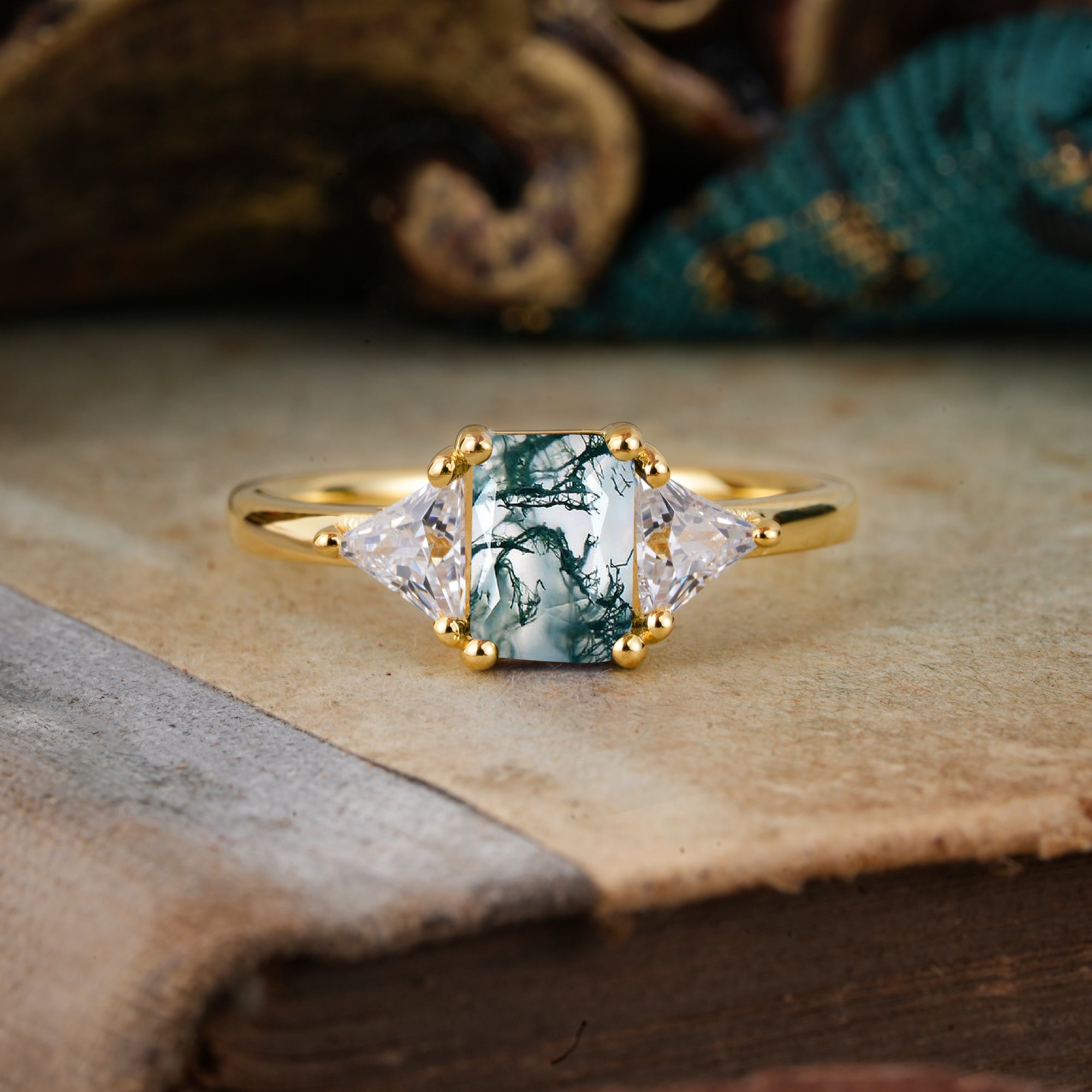 1CT Emerald Cut Moss Agate Three Stone Engagement Ring
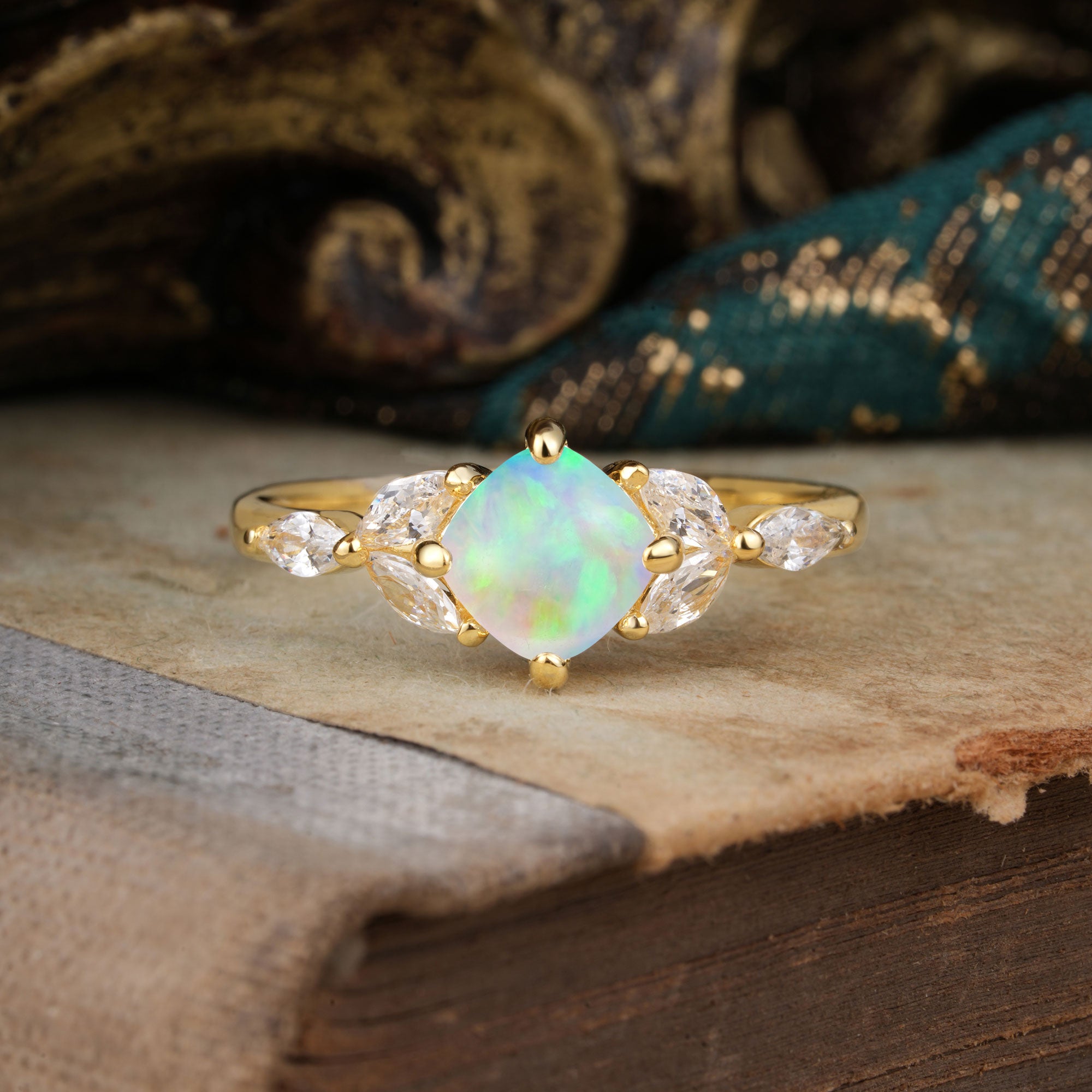 Cushion Cut 1 Carat Opal Anniversary Engagement Ring Classic Side Stone Ring
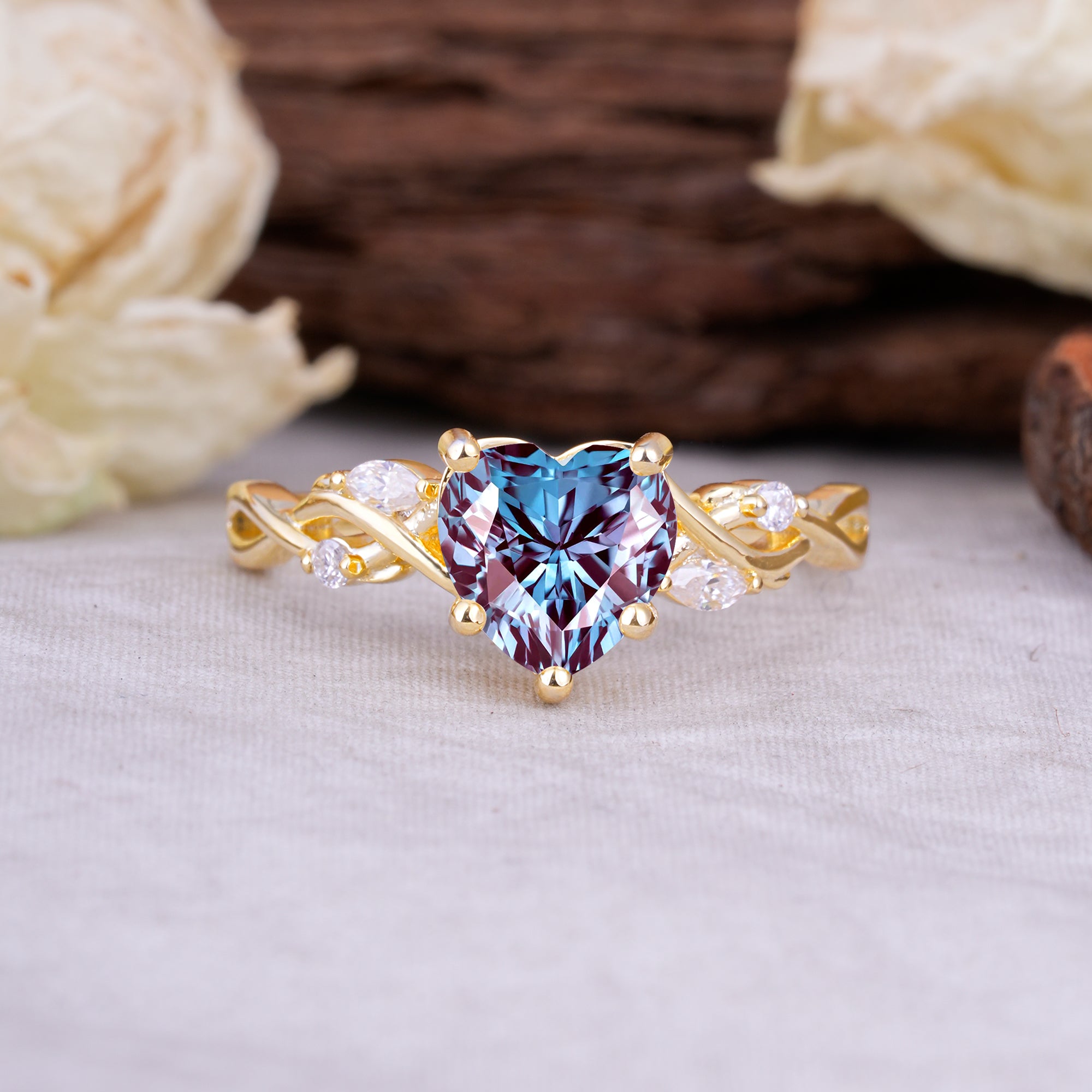 Vintage 5-Prong Heart-Cut Alexandrite Engagement Ring
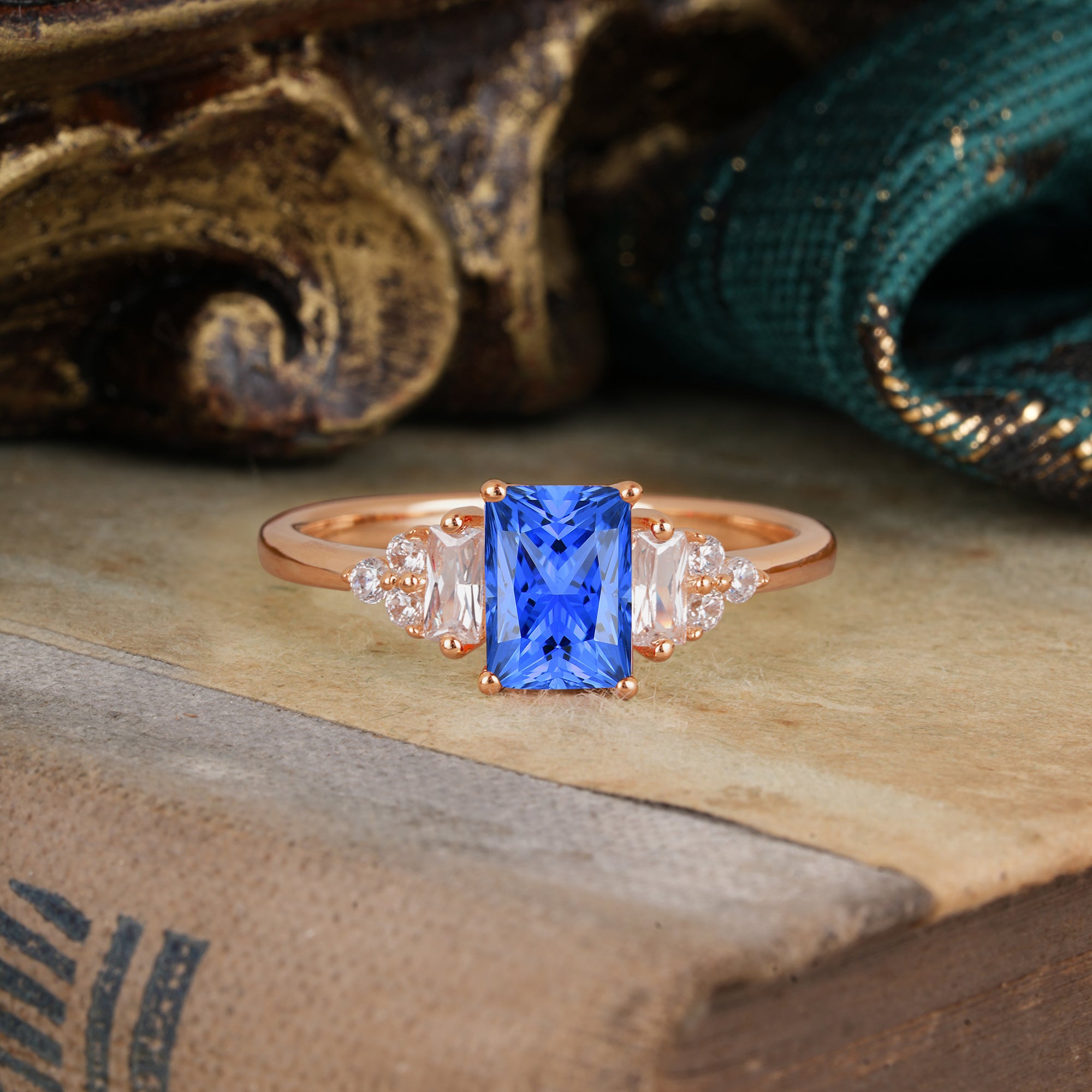 1 Carat Emerald Cut Sapphire Engagement Ring Classic Side Stone Engagement Ring
FAQs
Is moss agate durable enough for an engagement ring?
Yes, moss agate can be used in an engagement ring, especially when the wearer understands its care needs. IGS lists it at 6.5–7 Mohs with “Good” wearability, but it is less scratch-resistant than sapphire, alexandrite, or moissanite. A low, protective setting; separate storage; and removing it for impact-prone activities are sensible precautions.
Can an opal engagement ring be worn every day?
It can, but it is best for someone willing to follow a careful routine. GIA places opal at 5–6.5 Mohs, describes toughness as very poor to fair, and cautions that high heat or abrupt temperature change can cause fractures or crazing. Select a low, protective setting, clean only with warm soapy water, and remove it for sports, chores, gym sessions, and hands-on work.
Is alexandrite a practical alternative to a diamond?
Alexandrite is one of the strongest practical alternatives for regular wear. GIA rates it 8.5 Mohs and describes excellent toughness and no cleavage, which makes it suitable for rings subject to daily wear. Its color-change appeal is personal, so evaluate the individual gem in both daylight and warm indoor lighting before deciding.
Which alternative engagement-ring gemstone is most durable?
Within this guide, moissanite and sapphire are standout choices at 9.25 and 9 Mohs, respectively. Alexandrite at 8.5 Mohs and spinel at 8 Mohs are also strong candidates for regularly worn rings. But durability still depends on treatment, setting construction, the stone’s condition, and the wearer’s habits.
Are laboratory-grown gemstones suitable for engagement rings?
Yes. A laboratory-grown gemstone can be an excellent option when a buyer prioritizes a particular look, budget, size, or disclosure preference. The important requirement is clear terminology: the seller should identify the material as laboratory-grown, distinguish it from a simulant or imitation, and explain any relevant care guidance. GIA identifies moissanite as a laboratory-created jewelry stone with strong daily-wear durability.
How should I choose between moss agate, opal, and alexandrite?
Choose moss agate for one-of-one pattern and an organic visual story, with moderate scratch sensitivity in mind. Choose opal for play-of-color when you are comfortable with a more cautious care routine. Choose alexandrite for color change and strong daily-wear durability. In every case, assess the exact gem—not only a stock photograph—in the lighting where it will actually be seen.
Is a bezel setting best for alternative gemstones?
A bezel is often an excellent choice because it can protect more of a gem’s edge and keep the center stone relatively low. It is particularly useful for opal, moonstone, and moss agate, and it can look striking with sapphire, spinel, alexandrite, and moissanite. The best setting depends on the stone’s cut, thickness, girdle, light performance, and the wearer’s taste, so ask the jeweler how the specific design protects the specific gem.
What records should come with an alternative engagement ring?
Keep an itemized invoice stating the metal, center-gem identity, whether it is natural or laboratory-grown, any known treatments, construction details where relevant, and the price paid. For significant natural gemstones, ask whether an independent laboratory report is appropriate. Preserve photographs, inspection notes, repair records, and care instructions; those records can help with insurance, servicing, and future informed decisions.
Editorial and Gemological Scope Note
This article is an educational style and buying guide. It is not an appraisal, a grading report, a warranty, or a substitute for advice from a qualified jeweler or an independent gemological laboratory. Color, treatment, construction, durability, and value can vary within a gem species and from stone to stone. Before purchasing, request written disclosure, inspect the exact stone where possible, and consult an independent laboratory when the stone’s value or representation makes that appropriate.
References
[1] GIA 4Cs, Diamond Alternatives for Engagement Rings
[2] International Gem Society, Moss Agate Engagement Ring Guide
[3] GIA, Opal Care and Cleaning Guide
[4] GIA, Alexandrite Care and Cleaning Guide
[5] GIA, Sapphire Care and Cleaning Guide
Share